

There is a particular kind of courage in returning to the place where you started and doing the bravest version of the thing you have always done. In October 2026, Stella McCartney presented her Spring 2027 collection outdoors in the gardens of the British embassy in Paris, twenty five years after her first Paris collection. The setting was green and open, the clothes moved like water, and the whole show carried an ocean theme. What made it historic, though, was not the scenery. It was what was missing.
For the first time in the label’s history, the collection contained no wool at all. McCartney’s shows have never used leather, fur, or feathers, a stance she has held for decades while much of the fashion industry treated those materials as untouchable luxuries. This season she went one step further. “There is no wool on the runway this season, and I’m proud of that,” she said, describing the spirit of the collection as “Sea life, not sea food.”
That short sentence about wool deserves a pause, because it touches the distinction this site keeps coming back to. Vegetarian describes a diet that leaves out meat, and people sometimes borrow the word loosely for clothing as well. Vegan reaches further. A vegan wardrobe excludes every animal product, which means no leather and no fur, but also no wool, no silk, and no down. A coat can be honestly described as leather free and still be made from the fleece of a sheep. When a major fashion house removes wool from an entire runway collection, it is stepping past the easier claims and into genuinely vegan territory, and that is worth naming accurately and celebrating plainly.
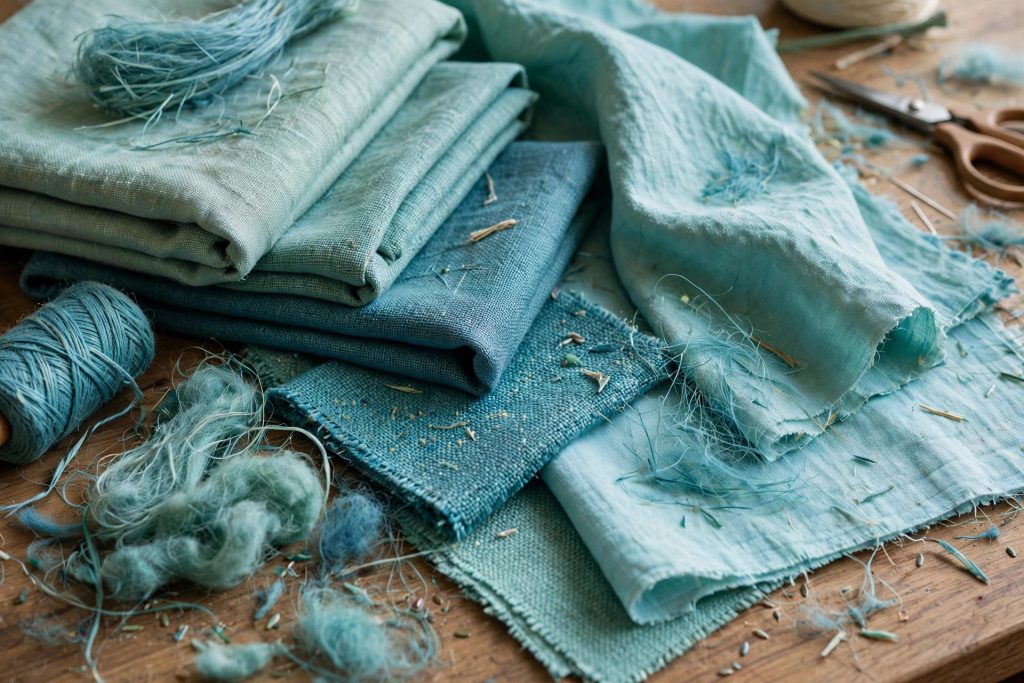
In place of animal fibers, the collection leaned on a new generation of materials that would have sounded like science fiction not long ago. Brewed Protein, developed by the Japanese company Spiber, is a fiber made through fermentation, using plant based feedstocks rather than animals, and it was offered here as an alternative to cashmere, that famously soft and famously expensive product of goats. Where a designer once had exactly one way to get that kind of softness, there is now a second way, and no animal stands in the middle of it.
The other materials tell the same story from different directions. Hydefy is a leather alternative grown from fungi and sugarcane waste, turning what agriculture throws away into something a person can wear with pride. FEVVERS supplies plant based feathers, which sounds like a contradiction until you remember what feathers are for in fashion: lightness, movement, and drama. None of those qualities actually require a bird. They require imagination, and this collection had it in abundance, from flowing ocean blue fabrics to silhouettes that suggested waves rather than walls.
Numbers help put the moment in proportion. The brand says about 98 percent of its materials are now cruelty free, conscious, and traceable. Traceable matters more than it might sound. It means the company can say where its materials come from, which is the opposite of the shrug the fashion industry has offered for generations when asked about the animals and workers inside its supply chains. A claim you can follow back to its source is a claim that can be checked, and honesty that can be checked is the kind worth trusting.
Christians should find something familiar in all of this. Long before fashion weeks existed, Scripture tied righteousness to the way a person treats animals: “A righteous man regardeth the life of his beast: but the tender mercies of the wicked are cruel” (Proverbs 12:10). Regard is a quiet word. It means paying attention, counting a life as worth noticing. An industry built on beauty has spent a very long time not regarding the lives behind its materials, and every designer who proves that beauty does not require that blindness makes it harder for the rest to keep looking away.
None of this means one runway show redeems an industry, and McCartney herself would likely be the first to say the work is unfinished. Two percent is still two percent, and high fashion prices keep these particular garments out of most closets. But direction matters. Twenty five years ago, a Paris collection without leather was treated as an eccentricity. This October, a Paris collection without wool, leather, fur, or feathers was treated as a headline, because it was one. The tide in that ocean themed garden is moving, and it is moving toward mercy.
News source: Vegan Food and Living, October 9, 2026


No Comments